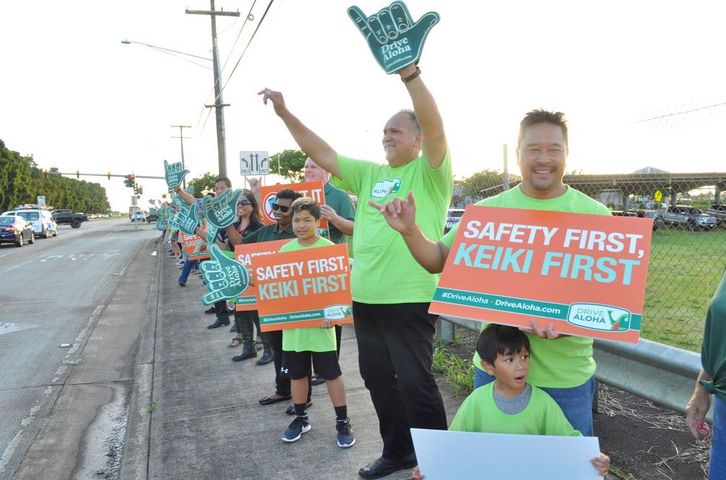
While driving in Hawaii may not seem any different than driving in the rest of the world, there are a few unspoken rules to follow on Hawaii’s roads. The underlying theme when doing anything in Hawaii is to do so with Aloha. This belief stems from the notion that one’s actions can have a ripple effect on those around you. Therefore, by considering your own actions and behavior, you are showing that you care about how your choices will affect others. The same applies to driving in Hawaii. Drive with aloha is a theme that embodies this same mentality – that by being considerate of other drivers, everyone benefits in the end.
In light of recent tragedies on our roads, we have decided to review 10 driving tips specific to Hawaii’s roads that will help to ensure safe commutes for all drivers – whether you’re a short term visitor or lifelong resident of the islands.
1. Pay attention and respect all rules of the road
If you are a first time driver in Hawaii, it’s probably best to do your research ahead of time to learn about the places you plan to visit. Hawaii roads can be extra confusing with lower speed limits, lots of one-way roads and two lane roads in more rural areas. It’s also best to look up road, highway and freeway names before your trip so you’re familiar – as an added bonus, ask a local how to pronounce the names correctly and you can be confident if you ever need to ask for directions.
2. Slow down
Hawaii speed limits tend to lean towards the slower side. While neighborhood and school districts range between 25-30 MPH, freeways tend to max out at 60 MPH. Speed limits are in place for a good reason and it’s always best to stay below the recommended speeds. When in doubt, go with the flow of traffic and don’t try to weave in and out of cars to get ahead. We’re all headed somewhere and it’s always best to arrive safely while also being considerate to the drivers around you.
3. Be aware of pedestrians
According to Hawaii News Now, there were 43 pedestrian fatalities in 2018 alone. Unfortunately, Hawaii is amongst the highest in the nation in pedestrian accidents and some attribute this unfortunate statistic to the lack of visible crosswalks. In some instances, drivers will see other cars slowing down near a crosswalk and will continue driving only to discover a pedestrian trying to cross. It’s best to be safe and slow down or stop completely in order to ensure pedestrians have safely passed before driving through the crosswalk.
4. Sightseeing? Pull to the side
Although beautiful, paradise still comes with equal dangers. We understand that there may be times when the view seems too good to pass up. However, it is important to be considerate of other drivers trying to reach their destinations. Many drivers become distracted by their beautiful surroundings and decide to make sudden stops or proceed very slowly to get the perfect shot. Our recommendation is to first, find a safe place off to the side of the road. This will allow other cars to pass and you will have the freedom to get out of your car to safely admire the view. It’s a win-win for all!
5. Happy honking only
We use car horns as a greeting to loved ones or to offer a shaka or thanks. Avoid using the horn to complain! Bottom line, we all have places to go and people to see – driving with aloha means letting people in with a smile or patiently waiting our turn at an intersection. It’s the Hawaii way and we love it!
6. Be cautious on wet roads
Rain makes for very limited visibility. On rainy days, reduce your speed and remember that roads can become very slick – especially during the first few minutes of rainfall as rain cools roadways and heat rises from asphalt. Hydroplaning is a very real danger and therefore, speeding should especially be avoided when roads are wet.
7. Be aware of Hawaii weather, flood advisories and potholes
Hawaii weather is known to change in an instant. Therefore, it is important to keep up to date with weather forecasts and to stay safe during flood advisories. NOAA weather is a great place to get live weather updates and to know what roads to avoid during heavy rains. Driving during flooding can be deadly and should be taken very seriously – in some cases, road closures may occur and it is important to heed all warnings. Additionally, Hawaii’s potholes can also be very serious. If you are driving on unfamiliar roads, we recommend being extra vigilant for potholes that’s could potentially damage your vehicle.
8. Plan your routes
As a rule of thumb, traveling in Hawaii tends to take significantly longer than in other parts of the world. Smaller roadways, slower speed limits and bad traffic all contribute to longer travel time. It may seem like everything is close on an island, but try getting stuck in traffic and a 15 minute drive will turn into a 3 hour wait in bumper-to-bumper traffic crawls. If at all possible, avoid rush hour traffic. In Honolulu and the neighbor islands, rush hour traffic typically runs between 6am to 8:30am and 3pm to 6pm. It’s always a better idea to avoid the roadways at these times and to spend it on more enjoyable activities– we suggest the beach!
9. Avoid passing
Many of Hawaii’s roads, especially in rural areas on the islands, are limited to only two-lane roads. Passing is allowed in certain areas, but we recommend doing so with caution. Do not pass more than one car at a time and never cross on windy stretches of roads or on roads with limited visibility. Putting your own and other’s lives at risk is never worth it!
10. Learn Hawaii directional words
When getting directions in Hawaii, you’ll notice the words “makai” and “mauka” being used regularly. “Makai” means toward the ocean while “Mauka” means toward the mountain. In addition to these directional words, locals will also use landmarks to give directions rather than street names or highway numbers. Be sure to familiarize yourself before your drive or ask for clarification if you’re still feeling a little lost!
We hope you can make use of these 10 Hawaii driving tips. While the beauty of Hawaii lie’s in it’s breathtaking views, diverse people and rich culture, there are a few things to consider before your explorations can begin. Respect and consideration are at the top of the list in Hawaii and learning the rules of driving with Aloha will help you to go far (LITERALLY) whether you’re visiting the islands for the first time or you’re a lifetime resident. We wish you all a safe and Aloha-filled experience out on the roads and give us a call if you should run into any trouble. We look forward to kokua-ing (helping) you! Aloha.
Get More Tips From K.W. Auto Body
We love to help our customers to simplify their lives. Check out more tips, tricks & hacks from our experts to help you to stay safe and drive with aloha.

I’ve Been In An Accident, Now What?
Even the most seasoned driver may be unraveled and frazzled after getting into an accident. This month we’re giving you our post-accident steps to help you limit the unnecessary worry and stress that comes from being involved in a car crash. It’s important to remember that stress and emotions are high at the time of a collision and that remaining calm is always a great place to start.

5 Enemies to Auto Body Paint
There are lots of chemicals that may permanently damage your car’s paint. Some are well-known enemies while others may surprise you. We’ve said it before, the more you know the better prepared you are to care for your vehicle. This month on the blog we’re dishing 5 surprisingly (yet common) substances that you’ll want to avoid to maintain your pretty paint job.

Germ-Free Driving
We can all agree that these last few months have absolutely flipped our world upside down. Covid-19 has forever changed our lives, and it’s safe to say that keeping the insides and outsides of our vehicles clean is vital. Below are a few car sanitizing tips to keep you driving germ-free.

Seat Belt Safety
According to The National Highway Traffic Safety Administrations (NHTSA), wearing your seat belt serves as the single most effective way to reduce the risk of death and injury in a vehicle crash. Since 1975 seat belts are responsible for saving nearly 300,000 lives! This month on the blog we’re discussing the most important safety measure for both passengers and drivers alike. You guess it – seat belts!

Car Washing 101
Here at KW Auto Body we consider our car a part of the family, and we do our very best to take care of it. Your vehicle’s exterior is the only line of defense against the elements which makes its regular wash so important. Below are four simple steps to maximize your car washing routine.

3 Tips to Keeping Your Car Clean On A Beach Day
May is in full swing, and while our state is still practicing social distancing to flatten the COVID-19 curve, the ocean never shut down. Even if you’re planning a trip to the beach for a quick in-and-out session, you can guarantee that sand and saltwater will make its back to your car. Below are 3 tips to keeping your car clean on a beach day.
Featured Services
We’ve got you covered! Our dedication to fast and friendly service means getting you back on the road as quickly, conveniently & safely as possible. No matter what repairs your car needs, K.W. Auto Body has got you covered.

Computerized Estimates
We offer C.C.C.ONE estimating system along with digital imaging.

Paint & Refinishing
We use Standox and a computerized paint matching system.

Auto Body & Collision Repair
We use Pro Spot Aluminum weld station for specialized repairs.

Unibody & Frame Repair
We are trained to use the car-o-liner computerized measuring system.
Jumpstart Your Repairs
You were in an accident. We're here to help. We are a full service auto body shop and are committed to serving you. Let's get you in the shop and back on the road seamlessly and quickly. Give us a call today!
Visit Us At One of Our Locations

OR
Airport
Address
2885 Ualena Street
Honolulu, HI 96819
Phone
(808)839-9887

Ala Moana
Address
1164 Kona Street
Honolulu, HI 96814
Phone
(808)591-8696

Product
Features
Integrations
Solutions
Resources
Partners
Blog
Help Center
Connect

